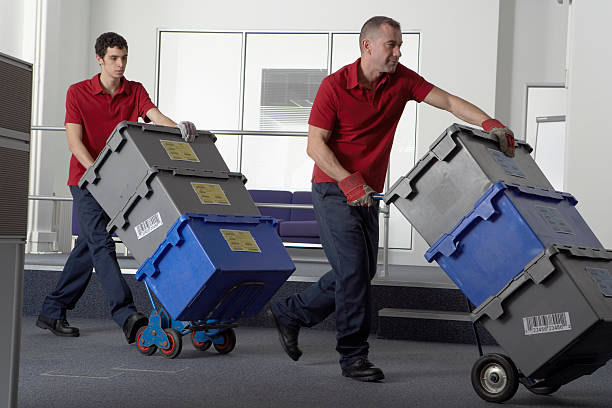
Apartment and condominium moves in the San Fernando Valley and across Los Angeles often involve more coordination than a single-family home move. Building management sets rules for elevator use, insurance documentation, loading access, and hours. Missing these steps can delay your move, add waiting time to an hourly job, or create issues with the property. This guide covers the practical details of elevator reservations and certificates of insurance (COIs) for local moves in the Valley, based on common practices in Los Angeles County. Rules and fees change, so always confirm current requirements directly with your building manager or property management company.
Why Building Rules Matter for SFV Apartment Moves
Many multi-family buildings in areas such as Canoga Park, Northridge, Sherman Oaks, Van Nuys, and Studio City require advance notice for moves. These rules protect common areas, control traffic in elevators and hallways, and limit the property’s liability. A move that runs long can affect other residents, so buildings typically limit the number of moves per day and assign specific time windows.
Common requirements include:
- Reserving the freight or service elevator for a set block of time
- Providing a certificate of insurance that names the building or management company as additional insured
- Using protective padding on elevators and sometimes hallways
- Parking the truck in a designated loading area or obtaining a street permit
- Moving only during allowed hours, often weekdays between roughly 8 or 9 a.m. and 5 p.m.
Walk-up buildings without elevators have fewer of these formal steps but still face stairs, narrow landings, and limited curb space. In either case, sharing the details with your movers early helps the crew plan crew size, equipment, and timing.
How Elevator Reservations Work
Most buildings with elevators require you (or your mover) to reserve the car in advance. The reservation is usually handled through the property manager, building concierge, or HOA office. You select a date and a time window—commonly a four-hour block. The building holds that elevator for exclusive or priority use during the slot and often requires protective padding to be installed.
Typical lead times range from one to three weeks, though some buildings ask for longer notice during busy periods. End-of-month and weekend slots fill quickly. If the previous move runs over, your window can be delayed; some residents book a second consecutive slot when available to reduce that risk. Fees for the reservation itself vary by building and are set by management, not by the moving company. Confirm the exact fee, any refundable deposit, and the cancellation policy when you book.
Key points to verify with management:
- Is a freight elevator available, or will the crew use a padded passenger elevator?
- What is the maximum length of the reserved window?
- Does the building provide padding, or must the movers supply it?
- Are there restrictions on weekends, holidays, or certain days of the month?
- Who installs and removes the padding, and is there a charge?
Measure doorways, elevator dimensions, and hallway turns before move day if you have large furniture. A sofa or mattress that fits the elevator on paper can still require disassembly if the path has tight corners. Share those measurements with your movers when you request the quote.
Certificates of Insurance: What Buildings Usually Require
A certificate of insurance (COI) is a document issued by a moving company’s insurance carrier. It shows that the company carries general liability, commercial auto, and workers’ compensation coverage. Most managed apartment and condo buildings in Los Angeles County will not allow a crew to begin work until a COI is on file that names the building owner, property management company, or HOA as an additional insured.
Common coverage amounts requested are $1 million per occurrence for general liability, though some larger or higher-end buildings ask for $2 million. The COI also typically lists the move date and the specific address. Exact wording, additional-insured entities, and any special endorsements differ by property. The reliable approach is to obtain the building’s written requirements sheet and forward it to your mover so the certificate matches what management expects.
Processing usually takes a few business days once the mover has the precise details. Same-day turnaround is sometimes available, but it is safer to request the COI as soon as the elevator slot is confirmed. Giant Movers 365 can provide a certificate of insurance when required, subject to the building’s stated coverage limits and available policy terms. We are a licensed California carrier (MTR-0192654).
Steps that keep the process smooth:
- Ask building management for their COI requirements in writing as soon as you set a move date.
- Send the full requirements, including exact entity names and addresses, to your moving company.
- Confirm receipt with the building a few days before the move.
- Keep a copy of the approved COI with your move documents.
Coordinating Elevators, COIs, and Parking
Elevator reservations and COIs are only part of access. Many Valley buildings also control where the truck can park. Some have a loading dock or designated curb space; others require a temporary parking permit from the city. In the City of Los Angeles, temporary permits for moving trucks are handled through the Department of Transportation. Rules, fees, and processing times differ by jurisdiction (Los Angeles, Burbank, Glendale, etc.), so check the official city site for the address of the building. We covered temporary parking permits for moving trucks in more detail in an earlier post; the same principle applies here—apply early and confirm the approved zone with both the city and the building.
A practical sequence:
- Set a preferred move date with your movers, noting any building blackout dates.
- Request the elevator reservation and obtain the building’s COI requirements.
- Forward COI details to the movers and confirm they can meet the limits.
- Apply for any required street parking permit.
- Reconfirm elevator, COI, and parking with management one week and again 24–48 hours before the move.
Timeline Checklist for Valley Apartment Moves
Use this as a starting checklist and adjust for your specific building:
- 3–4 weeks out: Book movers, request elevator reservation, obtain COI requirements, start decluttering.
- 2 weeks out: Submit COI request to movers, apply for parking permit if needed, begin packing non-essentials.
- 1 week out: Confirm elevator slot and COI approval in writing, finish most packing, measure large items against elevator dimensions.
- 1–2 days out: Reconfirm all access details, pack an essentials bag (documents, medications, chargers, basic kitchen items, toiletries), defrost refrigerator.
- Move day: Have building contact information and the approved COI available; keep walkways clear.
Local hourly rates with Giant Movers 365 start at $129 per hour for two movers and a truck or $164 per hour for three movers and a truck, with a three-hour minimum, then billed in 30-minute increments. Elevator wait time, long carries, and stairs all affect the total hours, so accurate access information helps produce a realistic estimate. California law also requires double drive time on local moves; we explained that calculation in a previous Valley-focused guide.
How Professional Movers Help with Building Logistics
Experienced local crews handle the physical work and also coordinate the practical side of building rules. That includes supplying elevator padding when required, working within the reserved window, protecting floors and walls, and providing the COI once they receive the building’s exact requirements. Sharing the reservation confirmation, COI details, parking instructions, and any large-item measurements when you request the quote lets the crew arrive prepared.
If your building has unusually strict limits or short notice availability, mention that early. In some cases a mid-week, mid-month date offers more elevator options and slightly lower demand. Always verify current fees, hours, and documentation needs with property management—those details are set by the building and can change.
Get a Free Quote for Your Valley Apartment Move
Giant Movers 365 is based in Canoga Park and handles local apartment, condo, and house moves throughout the San Fernando Valley and greater Los Angeles. We provide certificates of insurance when buildings require them (subject to stated limits), and we plan around elevator reservations and parking constraints. Call 310-988-5051 or request a free quote on giantmovers365.com. Share your move date, both addresses, approximate inventory, floor numbers, elevator status, and any building requirements you already have. We will confirm availability and outline next steps for a smooth local move.